

04Automation Cleaner
Stop making the team copy the same work twice.
We map the handoffs, repeated decisions, disconnected tools, and missing information—then build the smallest system that makes the operation move clearly.
The cleaner's shiftRepeated work → one clear flow
- 01 / Looks for
- Repeated manual work
- 02 / Connects
- People, tools, and data
- 03 / Measures
- Time and errors removed
The cleaner's shift 01—05
One shift. From tangled work to a clear operation.
The character is not decoration. This is the path we take through a real operation: diagnose, map, connect, remove the repeat, and leave the team in control.
01 / 05Diagnose
Find the tangle before adding another tool.
Internal software requests often begin after a team has already built an unofficial system across messages, spreadsheets, forms, and memory. Replacing every tool at once is rarely the useful first move.

02 / 05Map
A new tool can make a broken workflow harder to see.
We trace one piece of work from start to finish, find where information is copied or lost, and identify the decision that should happen once instead of five times.
- Workflow and operations mapping
- Repeated-task and handoff audit
- Data ownership and permission decisions
- Build-versus-connect recommendation
03 / 05Connect
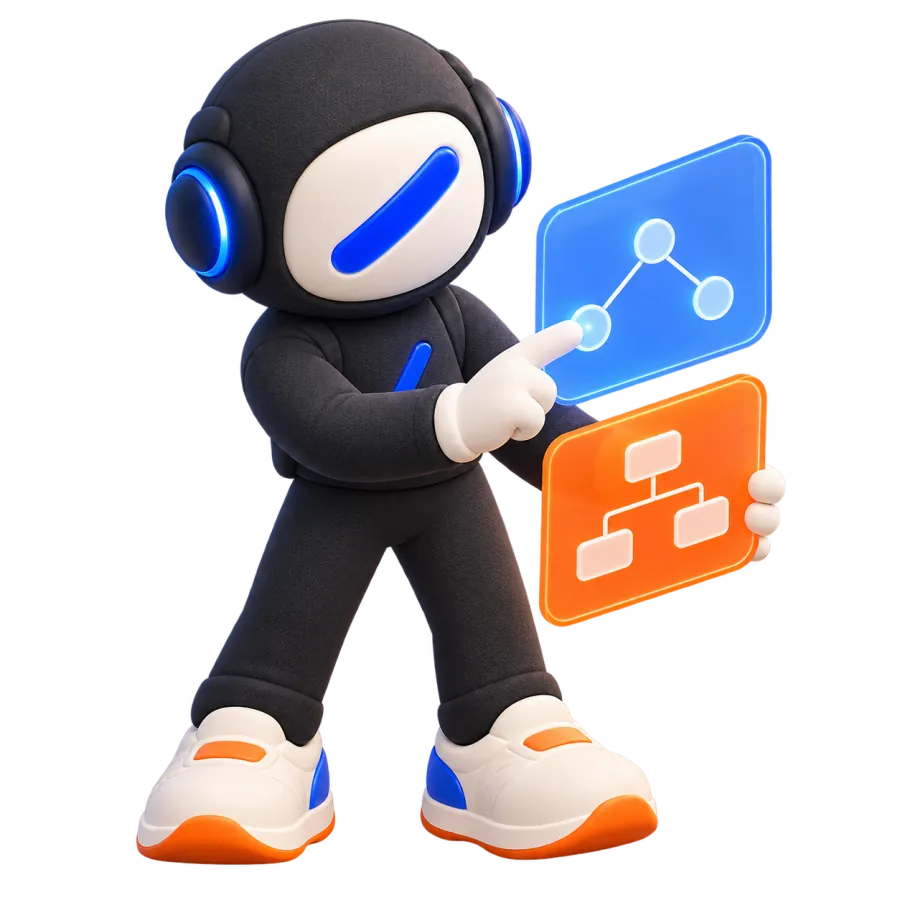
One operating path the team can understand.
The result might be an internal dashboard, a lightweight CRM, a structured form and approval path, a reporting layer, or an automation between tools the business already trusts.
- Internal dashboards and portals
- CRM and lead-routing workflows
- Inventory and content operations
- Approvals, notifications, and reporting
- API and no-code/low-code integrations where appropriate

04 / 05Remove
Remove drudgery. Keep judgment visible.
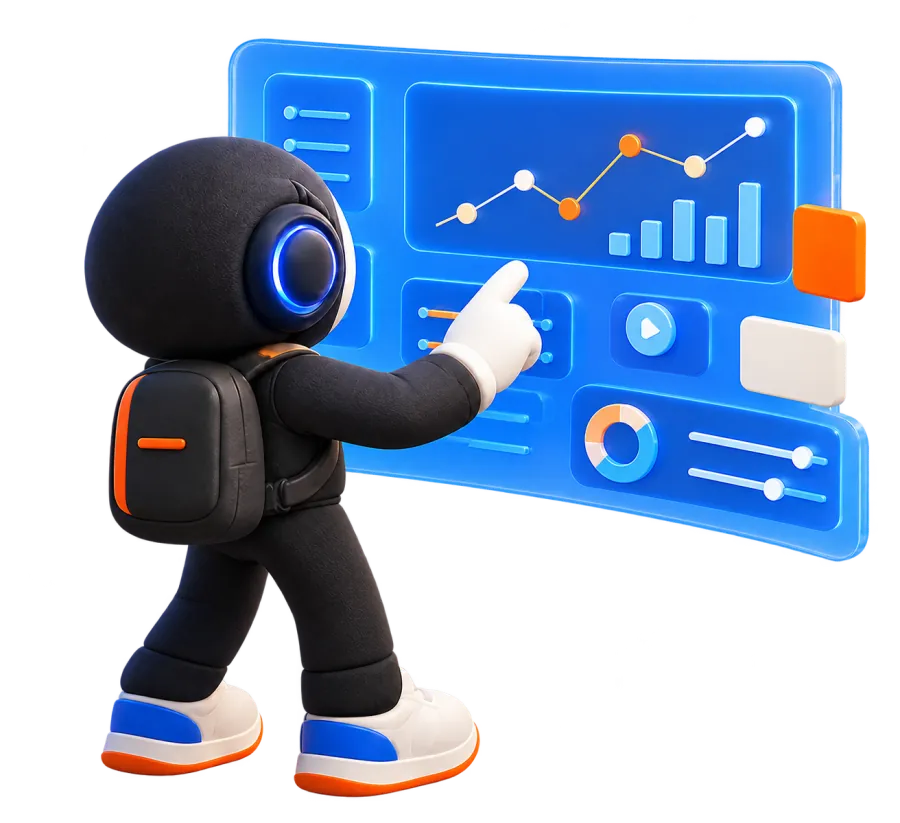
Automation is useful when it gives time back. It becomes risky when it quietly makes a decision nobody can explain. We make automated steps explicit, observable, and reversible where the business needs control.

05 / 05Operate
The team stays in control after launch.
We design for the person doing the work every day. Clear ownership, exceptions, recovery, and manual override matter as much as the happy path.
Proof in operation
Delux connected the public sales path to daily operation.
Inventory, multilingual pages, contact, and the team's ongoing work were treated as one system rather than separate website features.
Read the Delux case study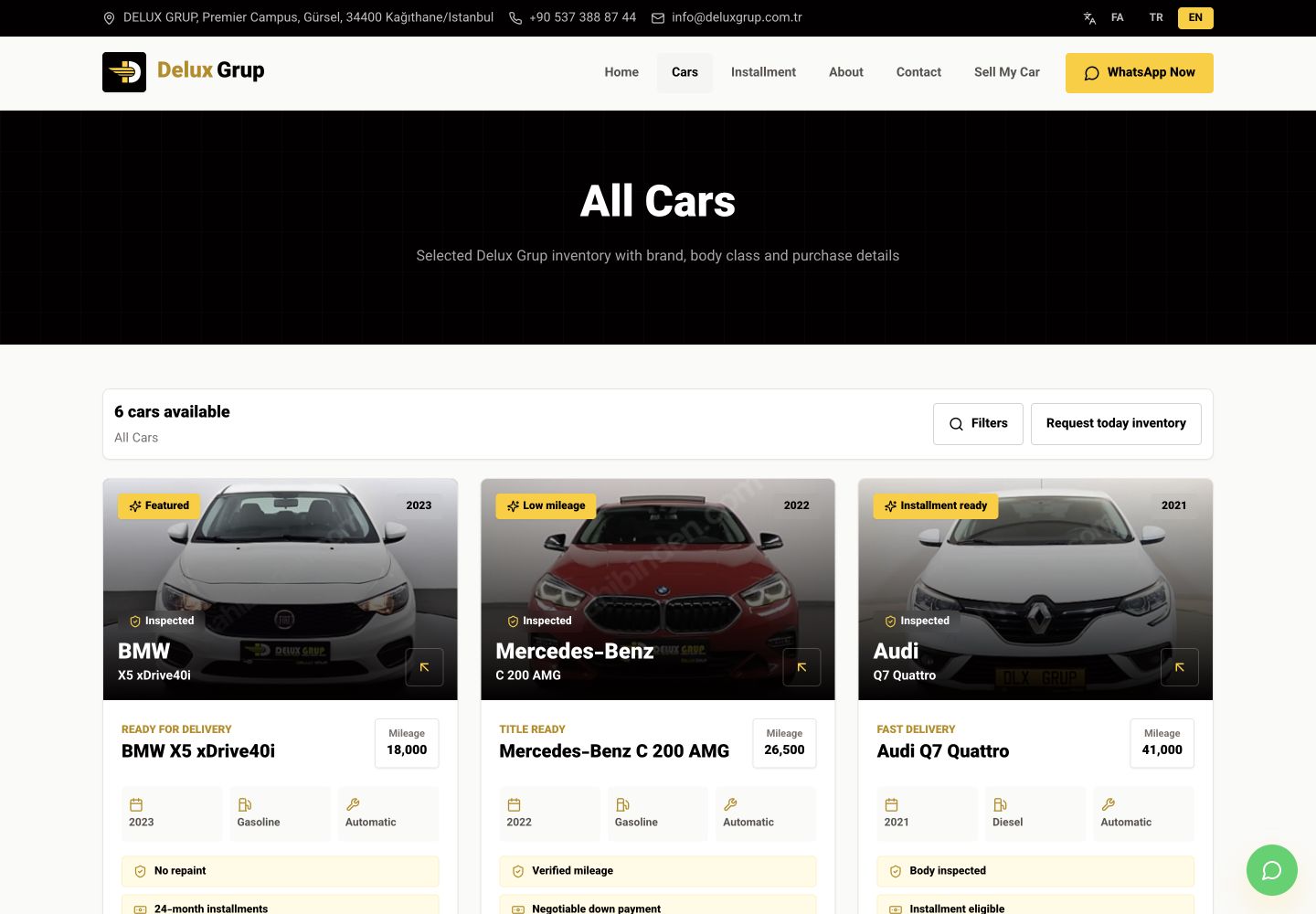
FAQ
Questions, answered directly.
Do we need to replace our existing tools?
Usually not all of them. We first decide which tools are trusted, where the gaps are, and whether connection or replacement removes more work.
Can you automate an existing manual workflow?
Yes, after mapping the decisions, exceptions, data, and owner of each step. Automating a misunderstood process usually makes the problem faster, not better.
Will the team be able to operate the system?
That is a core requirement. We design the operating path, permissions, documentation, and support model around the people who will own it.